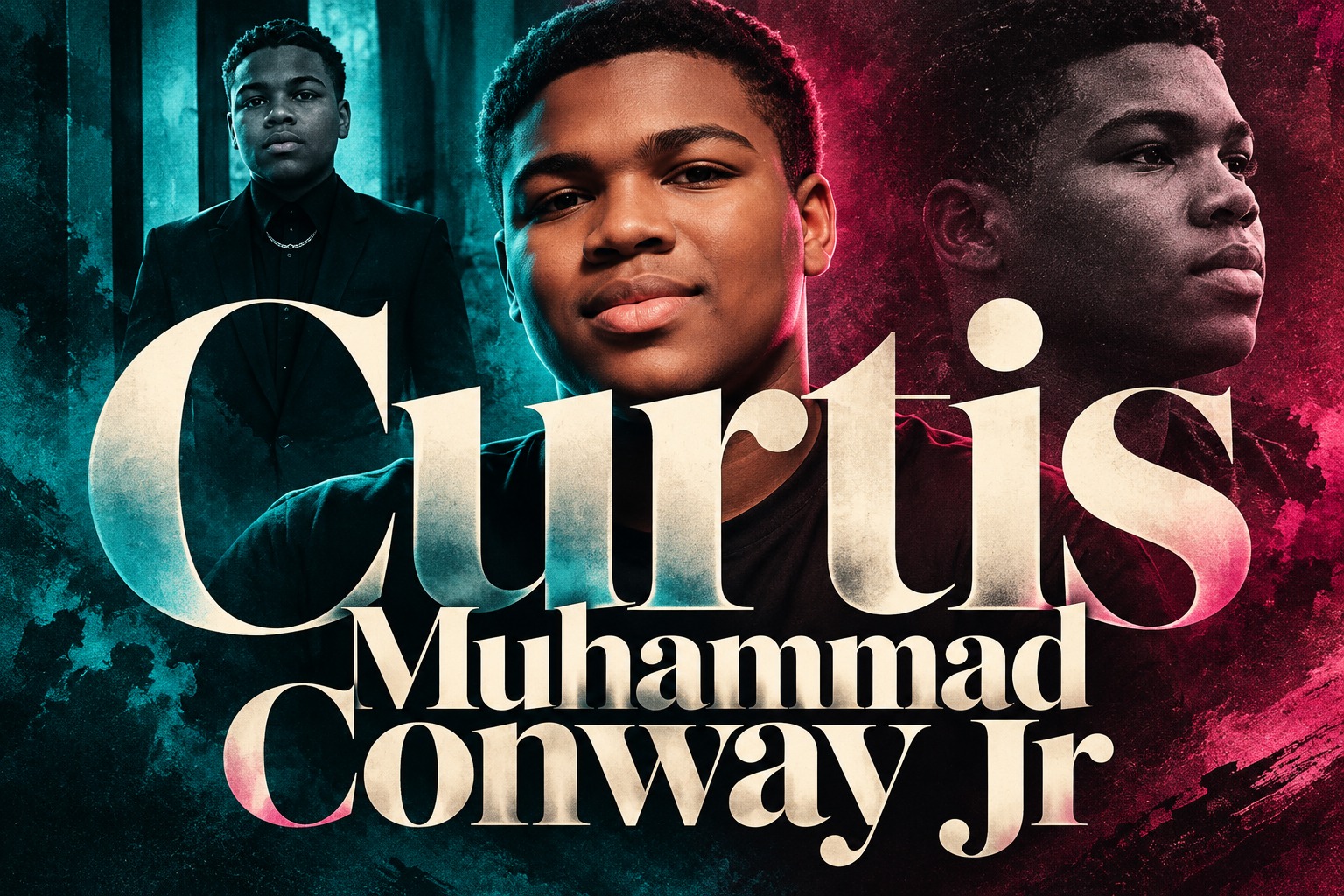
A name connecting two generations
Curtis Muhammad Conway Jr. was born on August 26, 2008, to Laila Ali and Curtis Conway. His name carries two family connections: Curtis for his father and Muhammad for his maternal grandfather, Muhammad Ali. Before any discussion of sporting potential, those names identify him as a son and grandson.
I find the combination striking because it brings together different athletic worlds. His mother competed in boxing, his father played professional football, and his grandfather became one of the most famous fighters in history. Yet Curtis Jr.’s own life is not a replay of any of theirs. His public biography remains primarily a family story.
Laila Ali’s undefeated career
Laila Ali was born on June 30, 1977, to Muhammad Ali and Veronica Porche Ali. She built a professional boxing record of 24 wins and no losses, establishing an athletic identity of her own within a family already synonymous with the sport.
Her career is a useful reminder that a famous surname can be both an introduction and an expectation. Laila entered a ring where her father’s name was already familiar, but the performances and results were hers. She later expanded into television, writing, and business, giving her public work a life beyond boxing.
Curtis Jr. was born after the period in which she built that undefeated record. He therefore knows his mother not only through the competitive career audiences remember, but through the later family and professional life that followed. Her achievements provide context without describing his own ambitions.
Curtis Conway’s football background
Curtis Lamont Conway was born on January 13, 1971, in Los Angeles. He played wide receiver in the NFL, beginning with the Chicago Bears in 1993. His professional career also included the San Diego Chargers, New York Jets, and San Francisco 49ers.
After playing, he worked in broadcasting, continuing his connection to football in a different role. That transition adds another element to the household’s sporting experience: the work of interpreting a game after years of participating in it.
I see two distinct professional disciplines in Curtis Jr.’s parents. Boxing centers on an individual contest, while a receiver’s performance unfolds within a team and an offensive system. Both demand preparation, but their skills and pressures differ. The family background offers more than a single inherited sporting script.
Marriage and the arrival of Sydney
Laila and Curtis married on July 23, 2007. Their son arrived the following year, and their daughter, Sydney J. Conway, was born on April 4, 2011. Curtis Jr. and Sydney are therefore a little under three years apart.
The siblings have occasionally appeared in photographs shared by their parents. Those images have drawn attention to how much they have grown, particularly when compared with earlier family pictures. They also show why a child’s life can become visible without that child establishing a public occupation.
Sydney’s own interests and plans are not extensively documented. Neither are the details of her relationship with her brother. The firm family connection is enough: they are the two children Laila and Curtis share, growing up within a wider blended family and an extended network of relatives.
Muhammad Ali as a grandfather
Muhammad Ali was born on January 17, 1942, and died on June 3, 2016. His boxing career produced a record of 56 wins and 5 losses, while his public identity extended into activism and cultural influence. Curtis Jr. was seven when his grandfather died.
The family connection is direct through Laila. It differs from the relationship millions of admirers formed with Ali through fights, speeches, and famous photographs. For Curtis Jr., the name Muhammad is also part of his own name, a permanent link to that maternal line.
Much public attention has focused on a perceived resemblance between grandson and grandfather. I understand why familiar features attract notice, but resemblance is not a prediction. A photograph cannot establish fighting ability, temperament, or a desire to enter the same profession.
Veronica and the wider Ali family
Veronica Porche Ali is Curtis Jr.’s maternal grandmother and the mother of Laila and Hana Ali. Hana has written about the family and her father, giving her a distinct role in preserving memories of Muhammad Ali.
Other members of the wider family include Maryum, Rasheda, Jamillah, Khaliah, and Miya Ali. Their activities and public visibility vary. Some have pursued writing, advocacy, or other work connected to personal interests and family experiences.
This larger network shows how a celebrated legacy can branch into many kinds of lives. Boxing is an important root, but it is not the only direction in which the family has grown. Curtis Jr.’s connection to those relatives exists independently of whether he chooses any public career.
His own path remains open
An established competitive boxing record for Curtis Jr. is not publicly confirmed in the available material. Claims that he has already begun a professional or substantial amateur career go beyond the dependable facts presented here. His parents’ achievements and family photographs should not be mistaken for a personal sporting résumé.
His finances are likewise not publicly established. Earnings associated with Laila, Curtis Sr., or Muhammad Ali belong to separate people and periods. For now, the clearest milestones in Curtis Jr.’s story are his birth, his relationships, and the occasional moments his family has chosen to share.
FAQ
Who are Curtis Muhammad Conway Jr.’s parents?
His parents are retired boxer Laila Ali and former NFL receiver Curtis Conway. They married in 2007 and welcomed him in August 2008, followed by daughter Sydney in April 2011.
How is he related to Muhammad Ali?
Muhammad Ali was his maternal grandfather. Laila is Ali’s daughter, and Curtis Jr.’s middle name honors that family connection.
Does he have a confirmed boxing career?
A dependable competitive record is not established in the available material. Public comparisons with his grandfather have largely concerned appearance and family heritage, which are different from verified athletic participation.
Why do his photographs attract attention?
Many viewers notice a resemblance to Muhammad Ali. The comparisons reflect the grandfather’s enduring familiarity, but they do not reveal Curtis Jr.’s personality, plans, or future profession.